What Is the Minimum Qualification Required for a Graphic Design Course in India?
Learn the minimum qualification for a graphic design course in India, including eligibility after Class 10, Class 12, diploma options, and degree requirements.
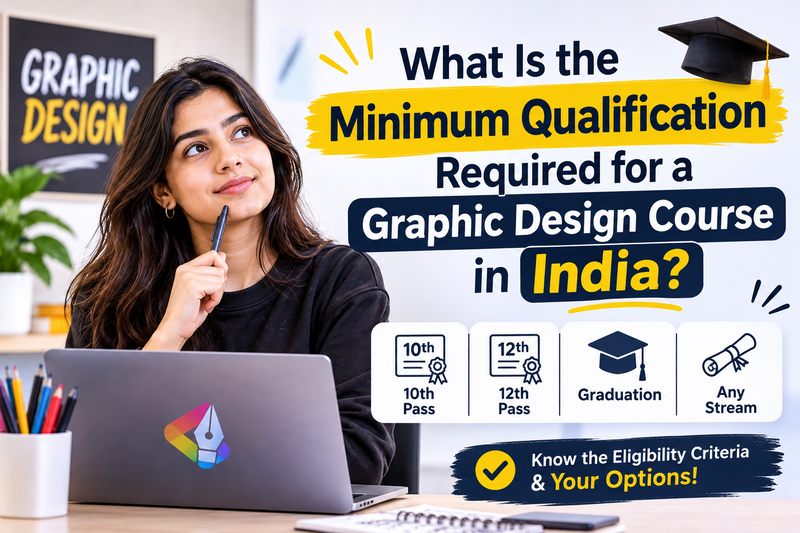
Choosing a career in graphic design can be an exciting step if you enjoy creativity, colours, typography, illustrations, and visual communication. However, one of the most common questions students ask before enrolling is: What is the minimum qualification required for a graphic design course in India?
The good news is that you do not always need a college degree or an advanced academic qualification to start learning graphic design. Many beginner-level courses accept students who have completed Class 10 or Class 12, while diploma and degree programmes may have specific eligibility requirements.
In this guide, we will explain the educational qualifications required for different courses, whether students from any stream can apply, what skills beginners need, and how to choose the right graphic design institute for your career goals.
What Is the Minimum Qualification for a Graphic Design Course?
The minimum qualification depends on the type of programme you want to pursue.
For many short-term certificate courses, students who have completed Class 10 may be eligible. Diploma programmes commonly accept Class 10 or Class 12 students, depending on the institution. Undergraduate degree programmes generally require students to complete Class 12 from a recognised board.
Here is a simple overview:
After Class 10: You may be eligible for beginner-level certificate courses and selected diploma programmes.
After Class 12: You can explore certificate courses, professional diplomas, and eligible undergraduate degree programmes.
After graduation: You can learn graphic design through professional training, advanced courses, or specialised programmes.
For working professionals: Many short-term courses allow you to develop design skills without leaving your current job.
Always check the eligibility criteria of the specific course before applying, as admission requirements vary between institutions.
Eligibility Criteria for Different Types of Graphic Design Courses
Before selecting a programme, understand how educational requirements differ according to course duration and qualification level.
1. Certificate Courses in Graphic Design
Certificate courses are suitable for beginners who want to learn the fundamentals of visual design in a relatively short period.
Depending on the provider, students who have completed Class 10 or Class 12 may be eligible. Some beginner courses may also have more flexible entry requirements.
These programmes generally cover:
Graphic design fundamentals
Colour theory and composition
Typography and font selection
Image editing and photo manipulation
Basic logo and poster design
Introduction to design software
A certificate course can be a useful starting point if you want to explore graphic design before committing to a longer programme.
2. Diploma Courses in Graphic Design
A diploma is a practical option for students who want structured training and more time to develop their design skills.
The minimum educational requirement may be Class 10 or Class 12, depending on the institution and programme. Some diplomas require students to have completed their higher secondary education.
A professional diploma may include:
Branding and visual identity
Advertising and marketing design
Brochure and packaging design
Social media creatives
Image editing and illustration
Portfolio development
Practical design assignments
Before enrolling, ask the institution about the course duration, eligibility, syllabus, software training, assessment process, and certificate recognition.
3. Degree Courses in Graphic Design
If you want a formal undergraduate qualification, you can consider a bachelor's degree in graphic design or a related design discipline.
For most undergraduate degree programmes, students must complete Class 12 from a recognised board. Some institutions accept students from any academic stream, while others may have additional admission requirements.
Depending on the programme, admission may involve an entrance examination, aptitude test, interview, portfolio review, or merit-based selection.
A degree programme may cover visual communication, design research, typography, illustration, digital media, branding, user experience, and creative problem-solving.
Important: Class 12 completion is a common requirement for undergraduate admission, but the exact criteria depend on the university and the specific degree.
Can You Join a Graphic Design Course After Class 10?
Yes, you may be able to start learning graphic design after Class 10.
If you are interested in creativity and want to develop practical skills early, you can look for beginner-friendly certificate courses or diploma programmes that accept Class 10 students.
Starting early can help you understand design principles and become familiar with professional software before pursuing higher education.
However, if your long-term goal is to earn a bachelor's degree, you will generally need to complete Class 12 and meet the university's admission requirements.
A practical approach is to begin with the fundamentals, practise regularly, and build a small portfolio of original designs while continuing your education.
Can You Pursue Graphic Design After Class 12?
Absolutely. Class 12 is an excellent stage to explore graphic design as a career.
Students from Arts, Commerce, and Science backgrounds can often apply for graphic design programmes, provided they meet the specific eligibility criteria. Previous experience in drawing or design is helpful but is not always compulsory.
After Class 12, you can choose between:
A short-term certificate course
A professional diploma
An undergraduate degree in graphic design
A related programme in visual communication or communication design
Your choice should depend on your career goals, budget, preferred learning style, and the time you can dedicate to training.
If you want to enter the workforce relatively quickly, a practical course may suit your needs. If you prefer a broader academic education, a degree programme may be more appropriate.
Do You Need to Be Good at Drawing to Learn Graphic Design?
No. You do not need to be an expert artist to begin a graphic design course.
Drawing skills can be useful for illustration, concept development, and certain creative projects. However, graphic design also involves layout, typography, colour combinations, image editing, branding, and communicating ideas visually.
You can develop these skills through regular practice and guided training.
For example, a beginner can start by creating a simple social media post, redesigning a poster, experimenting with fonts, or developing a basic brand identity.
The most important qualities are curiosity, creativity, attention to detail, willingness to learn, and the ability to accept feedback.
Which Skills Should You Have Before Joining Graphic Design Classes?
You do not need to master professional design software before enrolling. A good beginner programme should help you develop the necessary skills step by step.
However, a few basic abilities can make learning easier.
Basic Computer Knowledge
You should be comfortable using a computer, managing files, browsing the internet, and working with common applications. These skills make it easier to learn design software.
Creativity and Visual Thinking
An interest in colours, images, advertisements, packaging, and digital content can help you develop your creative thinking.
Communication Skills
Graphic designers often need to understand a client's requirements and explain their ideas. Basic communication skills are useful for both learning and professional work.
Attention to Detail
Design involves choosing appropriate fonts, aligning elements, maintaining spacing, and ensuring that the final layout is clear and visually balanced.
Willingness to Practise
Graphic design is a practical skill. The more you experiment with different layouts, design styles, and creative projects, the more confident you can become.
These skills can improve over time, so do not let a lack of experience stop you from getting started.
Which Software Do You Learn in a Graphic Design Course?
The software covered depends on the course syllabus and the institution. Many professional programmes introduce students to industry-used tools for creating digital and print designs.
Common tools include:
Adobe Photoshop: Used for image editing, photo manipulation, and digital creatives.
Adobe Illustrator: Used for vector graphics, logos, icons, and illustrations.
CorelDRAW: Used for vector design and many print-related projects.
Adobe InDesign: Used for layouts, brochures, catalogues, and multipage publications.
Figma: Useful for interface design and selected digital design workflows.
You do not need prior knowledge of all these applications before joining. Look for a programme that teaches the tools relevant to your goals and gives you opportunities to apply them through practical assignments.
Remember that software knowledge alone is not enough. Understanding design principles and solving visual communication problems are equally important.
How to Choose the Right Graphic Design Institute
Your educational qualification is only one part of the decision. The quality of your training can also influence how effectively you develop your skills.
Before enrolling in a graphic design institute, consider the following factors.
Check the Course Eligibility
Confirm the minimum qualification, age requirements if applicable, admission process, and documents needed for enrolment.
Review the Syllabus
Choose a course that covers design fundamentals, typography, colour theory, branding, image editing, and practical projects rather than focusing only on software demonstrations.
Look for Practical Training
Ask whether students work on posters, logos, advertisements, brochures, packaging, and social media creatives. Realistic assignments help you understand how design skills are used in professional settings.
Check Student Portfolios
Review examples of student work, where available. A portfolio can give you a better understanding of the practical training offered by the institution.
Understand the Course Certificate
Ask who awards the certificate and what it represents. If you are considering a formal diploma or degree, verify the awarding institution and the programme's recognition or approval status where applicable.
Ask About Career Support
If you want to work after completing the course, check whether the institution provides portfolio guidance, interview preparation, internship assistance, or placement support. Ask for clear details about what is included.
Taking time to compare these factors can help you choose a programme that matches your educational background and career expectations.
What Career Options Are Available After a Graphic Design Course?
After developing your design skills and building a strong portfolio, you can explore different career paths based on your interests.
Common options include:
Graphic Designer: Creates visual content for brands, businesses, and organisations.
Logo and Brand Identity Designer: Develops logos and visual identity systems.
Social Media Designer: Creates digital creatives for social media campaigns.
Advertising Designer: Designs promotional material for marketing and advertising.
Packaging Designer: Works on the visual presentation of product packaging.
Print Designer: Creates brochures, flyers, catalogues, and other print materials.
Freelance Graphic Designer: Works independently with clients on different design projects.
Some designers also move into UI design, motion graphics, or art direction after gaining relevant skills and experience.
Career opportunities depend on your portfolio, practical abilities, communication, experience, and the requirements of individual employers or clients. Completing a course can help you learn, but it does not automatically guarantee a job.
Is a Graphic Design Course Suitable for Beginners?
Yes. Many graphic design programmes are designed for people who have little or no previous experience.
A beginner-friendly course should introduce the fundamentals before moving to advanced techniques. It should also provide guided assignments, constructive feedback, and opportunities to create original work.
If you are unsure whether graphic design is right for you, try creating a few simple designs before enrolling. You can make a poster, design a social media post, experiment with typography, or create a basic logo concept.
These small projects can help you understand whether you enjoy the process of solving visual problems.
Frequently Asked Questions
1. What is the minimum qualification for a graphic design course in India?
For many beginner certificate courses, Class 10 may be sufficient. Some diploma programmes accept Class 10 students, while others require Class 12. Undergraduate degree programmes generally require Class 12 completion.
2. Can I join graphic design classes after the 10th?
Yes, if the selected course accepts Class 10 students. Check the eligibility criteria before applying, particularly if you want to pursue a diploma.
3. Can students from Commerce or Science study graphic design?
Yes. Many graphic design courses accept students from Arts, Commerce, and Science backgrounds. However, individual institutions may have specific eligibility conditions.
4. Is mathematics compulsory for graphic design?
Mathematics is not generally a compulsory subject for many certificate and diploma courses in graphic design. Degree programmes may have their own admission criteria, so check the requirements of your chosen institution.
5. Do I need drawing skills to become a graphic designer?
No. Drawing can be helpful, but it is not essential for every graphic design role. Typography, layout, colour theory, digital editing, and creative problem-solving are also important skills.
6. How long does it take to complete a graphic design course?
Duration varies by programme. Short certificate courses may take a few weeks or months, while diplomas and degree programmes generally take longer. Check the syllabus and total training hours before enrolling.
7. How do I choose the best graphic design course in India?
Compare the syllabus, practical projects, software training, faculty experience, portfolio development, certificate details, fees, and career support. Choose a course that fits your goals rather than relying only on its duration or promotional claims.
Final Thoughts
The minimum qualification required for a graphic design course in India depends on the programme you choose. Class 10 may be enough for selected beginner courses, Class 12 opens up more diploma and degree options, and graduates can pursue additional professional training to strengthen their skills.
You do not need to be an expert artist or have previous design experience to begin. With structured learning, consistent practice, and a portfolio of original projects, you can gradually develop the skills needed to explore graphic design as a career.
Before enrolling, compare different graphic design classes and institutions carefully. Focus on practical learning, a relevant syllabus, credible certification, and opportunities to build a portfolio.
The right course is one that matches your current qualification, supports your learning needs, and helps you move towards your long-term career goals.
Comments
No comments yet. Be the first to comment!