Online Interior Design Course With Certificate | Learn Online
Join an online interior design course with certificate and learn space planning, 3D design, colour theory, materials, and industry-relevant skills from home.
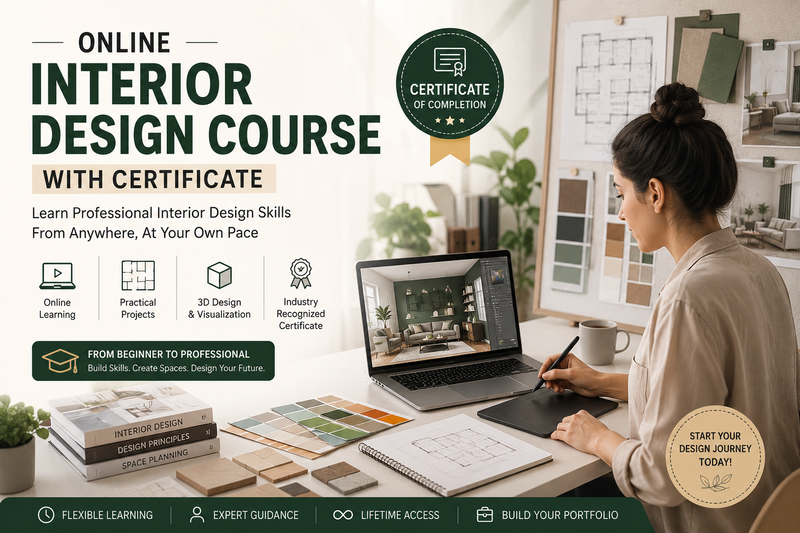
Interior design is no longer limited to traditional classrooms. With the growth of digital education, students, working professionals, and creative enthusiasts can now learn design skills from anywhere through an online interior design course with certificate.
A well-structured course can help you understand everything from space planning and colour theory to furniture selection, lighting, materials, and 3D visualization. Whether you want to start a design career, upgrade your existing skills, or explore interior design as a profession, online learning offers a flexible way to build practical knowledge.
What Is an Online Interior Design Course?
An online interior design course is a structured learning program that teaches the fundamentals and practical aspects of designing residential and commercial spaces through digital classes and learning resources.
Depending on the course level, students may learn:
Interior design fundamentals
Space planning and layout development
Colour theory and design principles
Furniture and material selection
Lighting design
Residential and commercial interiors
2D drawings and floor plans
3D modelling and visualization
Interior styling
Client presentation techniques
Portfolio development
Basic project planning
Many programs also include practical assignments that allow learners to apply design concepts to real-world projects.
Why Choose an Online Interior Design Course With Certificate?
A certificate can provide evidence that you have completed structured training in interior design. For beginners, it can also be a useful addition to a portfolio or professional profile.
Some key advantages include:
1. Learn From Anywhere
Online education allows you to study from home without relocating to another city. This can be particularly useful for students and working professionals who need flexible learning options.
2. Flexible Learning
Recorded lessons, digital study materials, assignments, and online sessions can make it easier to fit learning around your existing schedule.
3. Develop Practical Design Skills
A good course should focus on more than theory. Practical projects can help you understand how design concepts are applied to actual spaces.
4. Build a Professional Portfolio
A portfolio is important when looking for internships, freelance projects, or entry-level opportunities. Course assignments can become the foundation for a strong interior design portfolio.
5. Learn Industry-Relevant Software
Depending on the program, students may receive training in commonly used design and visualization software such as AutoCAD, SketchUp, 3ds Max, V-Ray, Revit, Lumion, or Photoshop.
What Will You Learn in a Professional Interior Design Course?
A professional interior design course generally combines creative concepts with technical and practical skills.
Interior Design Fundamentals
You can learn about design principles, visual balance, proportion, harmony, rhythm, contrast, and composition. These fundamentals help designers create spaces that are both attractive and functional.
Space Planning
Space planning involves deciding how different areas, furniture, circulation paths, and functional zones should be arranged. Students learn to create layouts that make efficient use of available space.
Colour and Material Selection
Understanding colours, textures, finishes, fabrics, wood, stone, glass, metals, and other materials is an important part of interior design. Learners can explore how different combinations affect the appearance and atmosphere of a space.
Furniture and Lighting
Furniture selection and lighting play an important role in functionality and aesthetics. Students can learn how to select appropriate furniture and create lighting plans for different interior environments.
2D Drawings and 3D Visualization
Technical drawings help communicate design ideas accurately, while 3D visualization allows clients to understand how a proposed space may look before execution.
Portfolio Development
A professional portfolio showcases your design thinking, drawings, concepts, 3D views, and completed projects. It can help demonstrate your abilities to potential employers and clients.
Can Beginners Join an Online Interior Design Course?
Yes. Many beginner-friendly programs are designed for students and learners who do not have previous professional experience.
If you have an interest in creativity, architecture, home décor, furniture, colours, or spatial planning, an introductory course can help you develop the basic skills required to move forward.
You do not necessarily need to be an expert in drawing or design software before starting. These skills can be developed progressively through practice.
Online Interior Design Course vs Free Interior Design Course
When searching for design education online, you may come across both paid programs and a free interior design course.
Free courses can be useful for exploring the basics before committing to a longer program. They may introduce topics such as colour theory, design principles, furniture arrangement, or basic space planning.
However, structured paid programs may provide additional benefits such as:
Guided learning
Practical assignments
Instructor feedback
Software training
Portfolio projects
Structured curriculum
Certificate upon completion
Career-oriented learning
Therefore, the right choice depends on your learning goals. If you simply want to explore interior design, free resources may be a good starting point. If your goal is to develop professional-level skills, a structured certification program may be more suitable.
Career Opportunities After Learning Interior Design
Completing an online course can be a starting point for developing skills and exploring different career paths in the design industry.
Depending on your education, portfolio, skills, and experience, potential roles may include:
Interior Designer
Interior Design Assistant
Residential Interior Designer
Commercial Interior Designer
Interior Stylist
3D Visualizer
CAD Designer
Space Planner
Furniture Designer
Freelance Interior Designer
Some learners may also use their skills to take up freelance residential projects, home styling assignments, or visualization work.
Skills You Should Develop Along With Interior Design
Technical knowledge alone is not enough to become a successful designer. You should also work on:
Creative Thinking: Develop the ability to generate original design concepts.
Communication: Learn to explain your ideas clearly to clients, contractors, and team members.
Attention to Detail: Small details involving materials, dimensions, colours, and finishes can significantly influence the final result.
Problem-Solving: Interior designers often need to work within limitations such as budget, space, structural conditions, and client requirements.
Software Skills: Familiarity with CAD, 3D modelling, rendering, and image-editing tools can improve your professional capabilities.
How to Choose the Right Online Interior Design Course
Before enrolling, compare the curriculum and learning features carefully. Look for a course that includes:
A clearly defined interior design syllabus
Practical assignments and projects
Training in relevant design software
Experienced instructors or mentors
Portfolio development
A certificate after successful completion
Flexible learning options
Career or placement guidance, where available
Avoid choosing a course based only on its certificate. The quality of the curriculum, practical training, projects, and feedback can be more important for developing genuine skills.
Is an Online Interior Design Course Worth It?
An online course can be worthwhile if you choose a program that matches your career goals and actively practise what you learn.
Watching lessons alone is not enough. Students should create floor plans, experiment with colour schemes, develop mood boards, practise 3D visualization, and build complete design projects.
The combination of interior design education, practical projects, software knowledge, and portfolio development can create a stronger foundation for a career in the design industry.
Frequently Asked Questions
Is an online interior design course with certificate useful for beginners?
Yes. A beginner-focused course can help you understand fundamental design concepts and develop practical skills before entering more advanced education or professional work.
Can I learn interior design from home?
Yes. Online classes and digital learning resources allow students to study interior design from home. However, practical assignments and regular practice are important for developing real-world skills.
Is a certificate necessary to become an interior designer?
A certificate can demonstrate completion of a particular training program, but professional opportunities also depend on your skills, portfolio, education, experience, and the requirements of the role or project.
What software is used in interior design?
Commonly used tools can include AutoCAD, SketchUp, 3ds Max, Revit, V-Ray, Lumion, and Photoshop. The exact software covered depends on the course curriculum.
Can I start with a free interior design course?
Yes. A free course can help you understand basic concepts and determine whether interior design interests you. For professional skill development, consider progressing to a structured course with practical training.
How long does an online interior design course take?
The duration varies depending on the program. Short-term certificate courses may take a few months, while diploma and degree programs can require significantly more time.
Start Building Your Interior Design Skills
Interior design combines creativity, technical knowledge, visual communication, and problem-solving. An online interior design course with certificate can provide a convenient starting point for learners who want to develop these skills without attending traditional classroom sessions.
Whether you begin with a free interior design course to explore the basics or choose a structured professional interior design course, focus on practical learning, software skills, and portfolio development.
With consistent practice and the right training, you can turn your interest in interiors into a valuable creative skill and explore opportunities across residential design, commercial spaces, visualization, styling, and freelance work.
Comments
No comments yet. Be the first to comment!