How to Become a Professional Graphic Designer in India: A Step-by-Step Roadmap
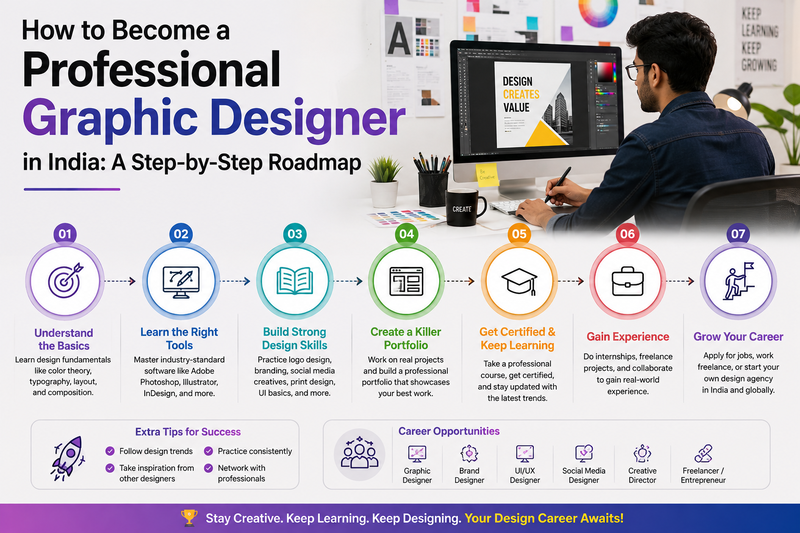
Every logo you recognize, every app you enjoy using, and every ad that catches your eye is the result of thoughtful design work. Behind that work is a trained designer — and increasingly, that designer got their start through a structured graphic design course. If you're wondering how to break into this creative field, here's a practical roadmap to help you go from beginner to professional.
Step 1: Understand What the Design Industry Actually Needs
Before jumping into any graphic design classes, it helps to understand where the demand lies. Indian and global companies are hiring designers for:
Social media and digital marketing content
Website and app interfaces (UI/UX)
Branding, logos, and packaging
Print collateral and advertising campaigns
Motion graphics and short-form video content
Knowing this landscape helps you choose a course that aligns with real job opportunities rather than outdated skill sets.
Step 2: Build Strong Design Foundations
No matter how advanced the tools get, foundational skills remain non-negotiable. A solid graphic design course will teach you:
Color theory and how it influences perception
Typography and readability principles
Grid systems, layout, and visual balance
The psychology of design and audience communication
These fundamentals are what separate a designer who simply "uses software" from one who understands why a design works.
Step 3: Get Comfortable With Professional Tools
Software fluency is essential, but it should be taught alongside creative thinking, not in isolation. Look for graphic design classes that cover:
Adobe Photoshop and Illustrator for raster and vector design
Adobe InDesign for print and publication layouts
Figma or Adobe XD for UI/UX and interface design
Canva for quick, social-friendly content creation
Many programs today also introduce AI-powered design assistants, which is quickly becoming a standard part of any relevant graphic design course 2026.
Step 4: Choose the Right Learning Environment
This is where selecting a good graphic design institute makes a real difference. A strong institute typically offers:
Mentorship from working design professionals
Real client-style briefs instead of only theoretical exercises
Feedback loops through critiques and revisions
A structured path from beginner to portfolio-ready designer
Compare a few shortlisted institutes based on curriculum, faculty background, and the kind of student work they showcase — this tells you more than marketing claims ever will.
Step 5: Build a Portfolio, Not Just a Certificate
Employers and clients care about what you can do, not just what certificate you hold. As you progress through your course, focus on:
Creating 8–10 strong, varied projects (branding, social media, print, UI)
Documenting your design process, not just final outputs
Publishing your work on platforms like Behance or a personal website
Seeking feedback and iterating based on real critique
A well-curated portfolio is often the single biggest factor in landing your first design role or client.
Step 6: Gain Real-World Experience
Once your fundamentals and portfolio are in place, look for:
Internships with agencies or design studios
Freelance micro-projects to build client experience
Collaborations with startups needing affordable design support
Design challenges or competitions to sharpen your speed and creativity
This hands-on exposure bridges the gap between classroom learning and actual industry expectations.
Step 7: Keep Learning Beyond the Course
Design trends shift quickly, and staying relevant means continuous learning even after your graphic design course ends. Follow design communities, study rebrands and case studies from top brands, and revisit your skills regularly — especially as new tools and formats emerge each year.
Final Thoughts
Becoming a professional designer isn't just about finishing a program — it's a combination of the right training, consistent practice, and real-world exposure. By choosing quality graphic design classes, staying current with what a graphic design course 2026 should offer, and picking a graphic design institute that genuinely invests in your growth, you set yourself up for a long, adaptable creative career.
Frequently Asked Questions
Q1: How much time should I dedicate daily to learn graphic design? 1–2 focused hours of practice daily, combined with structured coursework, is generally enough to build strong skills over a few months.
Q2: Can I switch to graphic design from a non-creative career? Yes. Many successful designers come from unrelated backgrounds like commerce, engineering, or marketing. A good course fills the skill gap regardless of your starting point.
Q3: What's more important — software skills or design theory? Both matter, but design theory (composition, color, typography) typically has a longer-lasting impact on your work than tool proficiency alone.
Q4: Is freelancing a realistic option right after a graphic design course? Yes, especially with a strong portfolio. Many new designers start with freelance projects before or alongside pursuing full-time roles.
Comments
No comments yet. Be the first to comment!