Graphic Design Course in India | Skills & Careers
Explore a graphic design course in India, learn design software, branding, and visual communication, and choose the right graphic design institute.
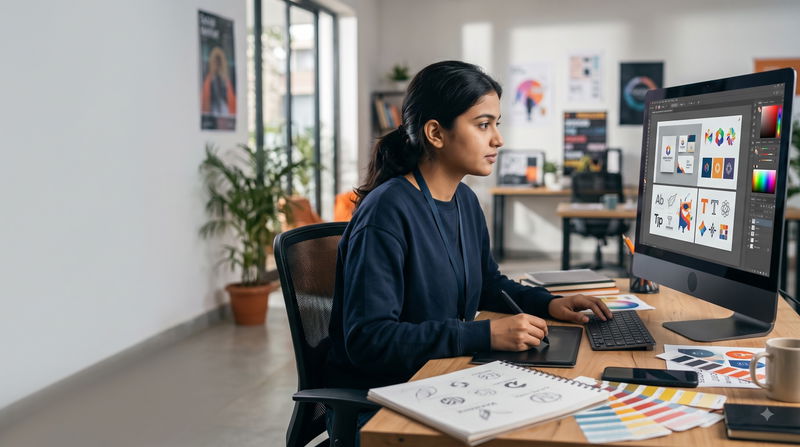
Have you ever wondered how a simple idea becomes an attractive advertisement, a memorable logo, or an engaging social media post? Graphic design makes this possible by combining creativity, visual communication, and digital tools to deliver meaningful messages. For students who enjoy creating things and exploring new ideas, learning graphic design can open the door to an exciting range of creative opportunities.
A well-structured graphic design course helps beginners understand how professional designs are planned, created, and improved. It introduces learners to important design principles, software applications, branding concepts, and practical assignments that develop their creative abilities.
Today, students can explore different learning options depending on their interests and educational goals. If you are searching for a graphic design course in India, understanding the course curriculum, practical training opportunities, and career possibilities can help you make a more informed decision.
Understanding the World of Graphic Design
Graphic design is a form of visual communication used to present ideas, information, and messages through images, typography, colours, illustrations, and layouts. Its purpose is not only to make something look attractive but also to communicate information effectively.
For example, an online store may need product banners to promote a sale, while a new business may need a logo and brand identity to introduce itself to customers. Educational institutions may require brochures and admission creatives, while digital marketing companies need graphics for advertising campaigns.
Graphic designers help create these visual materials by understanding the objective of a project and choosing suitable design elements.
Learning graphic design involves developing both technical and creative abilities. Software knowledge helps you produce artwork, while design fundamentals help you make decisions about colour, layout, readability, and visual balance.
A professional learning programme brings these areas together and helps students understand how design works in different real-world situations.
Why Should You Enrol in a Graphic Design Course?
Learning graphic design through a structured programme can provide a clear path from basic concepts to practical design work. Instead of trying to understand everything independently, students can follow a curriculum that introduces skills progressively.
Here are some important benefits of taking a graphic design course.
Develop Your Creative Thinking
Graphic design encourages you to look at ordinary information from different perspectives. You learn to transform ideas into visuals that communicate a specific message.
For example, designing a poster requires more than selecting an image and adding text. You must decide which information deserves attention, how colours support the message, and how the layout guides the viewer's eyes.
Practising these decisions helps you become more confident in approaching different creative challenges.
Learn Professional Design Software
Digital design tools allow you to edit images, create illustrations, develop brand identities, and prepare marketing materials. Depending on the syllabus, a graphic design course may introduce you to Adobe Photoshop, Adobe Illustrator, CorelDRAW, and Adobe InDesign.
These applications serve different purposes. Photoshop is useful for image editing, Illustrator is commonly used for vector graphics, CorelDRAW supports vector and print-related design tasks, and InDesign is suitable for multi-page layouts.
Learning when and how to use each tool can help you complete design projects more efficiently.
Understand the Complete Design Process
Professional design work usually begins with an objective rather than a software application. Designers need to understand the audience, research the subject, explore ideas, create initial concepts, and refine the final artwork.
A practical course can help students follow this process through assignments and project-based learning. This approach develops the habit of thinking about the purpose of a design before starting to create it.
Prepare for Different Creative Opportunities
Graphic design skills are used across advertising, publishing, e-commerce, entertainment, digital marketing, and corporate communication. Training may help you explore different areas and identify the type of work that suits your interests.
However, career growth also depends on your design quality, portfolio, professional communication, and willingness to keep learning.
What Skills Should a Graphic Design Course Cover?
When comparing programmes, look beyond the course name. A useful curriculum should help you understand visual concepts, apply software tools, and create designs for different purposes.
1. Typography and Layout Design
Typography involves selecting and arranging text so that information is easy to read and visually consistent. Students learn how font styles, sizes, line spacing, and alignment influence a design.
Layout design focuses on arranging text, images, and other elements within a defined space. These skills are useful for creating posters, brochures, advertisements, presentations, and digital graphics.
2. Colour Theory and Composition
Colours can influence how a design feels and how its message is perceived. Students explore colour combinations, contrast, harmony, and the relationship between colours and visual identity.
Composition helps designers organise the elements within a layout. Principles such as balance, alignment, spacing, and visual hierarchy can make a design easier to understand.
3. Image Editing and Digital Artwork
Image editing is useful when preparing photographs, promotional graphics, product images, and digital compositions. Students may learn techniques involving layers, masks, selections, retouching, and image adjustments.
These skills are particularly helpful for learners interested in advertising creatives, e-commerce visuals, social media graphics, and digital content production.
4. Logo Creation and Brand Identity
A brand identity helps a business present a consistent visual image to its audience. This can include logos, typography, colour palettes, icons, and other graphic elements.
Students may practise developing concepts for fictional brands, creating alternative logo ideas, and presenting a consistent visual identity across different materials.
Such assignments encourage both creative exploration and structured problem-solving.
5. Print and Digital Media Design
Print design and digital design have different technical requirements. A printed brochure, for instance, requires attention to resolution, margins, bleed, and colour settings. A social media post needs to be readable on a screen and suited to its platform.
A comprehensive graphic design course may introduce students to both areas, allowing them to develop a broader understanding of professional design applications.
How to Choose the Best Graphic Design Institute for Your Goals
Finding a suitable graphic design institute is an important part of planning your education. The right institute should offer a learning experience that matches your current skill level and future ambitions.
Before making a decision, consider these factors.
Review the Subjects and Software
Read the course syllabus carefully to understand which topics are included and how they are taught. Check whether the programme covers fundamental design concepts alongside software training.
If you want to focus on logo design, for example, look for relevant vector graphics and branding assignments. If your main interest is digital marketing, investigate whether the programme includes social media creatives, online advertising graphics, and campaign design.
Ask About Practical Assignments
Design skills improve through practice. An institute should ideally provide opportunities to work on different types of assignments, receive feedback, and improve completed projects.
Ask for examples of student work or details about the projects included in the programme. This can help you understand whether the course focuses on practical learning or mainly on software demonstrations.
Understand the Teaching Approach
Beginners often benefit from clear explanations, guided exercises, and regular feedback. Find out how classes are structured and how instructors support learners when they face difficulties.
You may also want to check whether learning materials, recorded sessions, or additional practice opportunities are available.
Check Course Duration and Eligibility
Graphic design programmes are offered in different formats, including short-term courses, diplomas, and degree programmes. Their duration, admission requirements, and academic recognition can vary.
Choose a programme based on the depth of learning you need, your schedule, and your educational objectives. Confirm the exact eligibility criteria before applying.
Evaluate Portfolio and Career Guidance
A portfolio is one of the most useful ways to demonstrate your design ability. Check whether the institute provides project reviews, portfolio development guidance, or advice on presenting your work.
If career support is offered, clarify what it includes. Placement assistance, internships, interview preparation, and employment guarantees are different things, so understand the terms before enrolling.
What to Expect from Graphic Design Classes
Good graphic design classes should make learning interactive and practical. Students need time to experiment, ask questions, test different approaches, and understand why some design choices work better than others.
A typical learning journey may begin with simple exercises involving colours, shapes, and typography. Students can then progress to image editing, vector artwork, logo concepts, layouts, and promotional designs.
As their confidence develops, they may complete larger assignments that combine multiple skills. For example, a brand design project could involve developing a logo, selecting brand colours, creating a promotional poster, and designing social media graphics for the same fictional business.
This type of project encourages students to think about consistency and purpose rather than treating each design as an isolated task.
Regular feedback is also valuable. Reviewing a design, identifying areas for improvement, and revising the work helps develop stronger creative habits.
Career Paths After Learning Graphic Design
After completing training and building suitable project experience, learners can explore different career options. The roles available will depend on the individual's skills, portfolio, experience, and the needs of employers.
Graphic Designer: Creates visual materials for businesses, organisations, and marketing campaigns.
Brand Identity Designer: Develops logos and visual systems that help businesses maintain a recognisable brand image.
Digital Marketing Designer: Produces digital creatives for online promotions, campaigns, and advertising materials.
Social Media Graphic Designer: Designs posts, banners, stories, and other visual content for social platforms.
Publication Designer: Works on brochures, catalogues, magazines, reports, and other multi-page materials.
Packaging Designer: Helps develop the visual appearance of product packaging, including graphic layouts and branding elements.
Freelance Graphic Designer: Provides design services to clients independently, subject to the ability to find projects, manage deadlines, and maintain professional relationships.
With further experience, some designers choose to specialise in areas such as motion graphics, user interface design, illustration, or creative direction.
How to Improve Your Skills While Learning
Joining a graphic design course is only the beginning. Regular practice and a willingness to experiment can make a significant difference in your progress.
Start with small projects that have a clear purpose. Design a promotional poster for an imaginary event, create a logo for a fictional business, or develop a social media campaign for a product.
Try different colours, typefaces, and layouts before deciding which version communicates the message most effectively. Study design examples to understand how experienced designers organise information, but develop your own concepts instead of copying existing work for your portfolio.
Keep your completed projects organised and review them regularly. As your skills improve, revisit older designs and identify what you would change. This simple habit can help you recognise your progress and develop a more thoughtful design approach.
You should also practise explaining your decisions. Being able to describe why you chose a particular layout, colour palette, or visual style can be valuable when presenting work to clients or collaborating with a team.
Explore Graphic Design Learning at Inframe School
If you are planning to develop your creative skills, Inframe School is one option to explore while researching graphic design education. Before choosing a programme, review the available course details, subjects, practical assignments, and learning requirements to see whether they align with your goals.
A suitable graphic design course in India should help you build a foundation in design principles, understand relevant software, and practise creating purposeful visual content.
Visit the Inframe School website to learn more about its educational offerings and available design programmes.
Take the time to compare your options, understand the curriculum, and choose a learning path that supports your interests. With consistent practice, constructive feedback, and a well-developed portfolio, you can work towards building your own place in the creative field.
Frequently Asked Questions
1. What is the best way to start learning graphic design?
Begin by understanding colour theory, typography, composition, and visual hierarchy. Then practise using suitable graphic design software and apply your knowledge through small projects.
2. How do I choose a graphic design course in India?
Compare the curriculum, software training, practical assignments, duration, eligibility, certification, and portfolio support. Select a programme that matches your skill level and career goals.
3. What should I look for in a graphic design institute?
Look at the trainer experience, course structure, practical learning opportunities, student projects, available resources, and career guidance. Verify any claims about certification or placement support before enrolling.
4. Are graphic design classes useful for working professionals?
Yes. They can help working professionals develop new creative skills, improve their understanding of design software, and explore ways to create better visual content for their work.
5. Do I need to be good at drawing to become a graphic designer?
No. Drawing can be helpful in some design specialisations, but graphic design also involves typography, layouts, image editing, branding, and visual problem-solving. Many of these skills can be developed through structured practice.
6. How can I prepare for a graphic design job?
Learn relevant design tools, practise completing realistic assignments, develop a portfolio, and improve your communication skills. Reviewing job requirements can also help you identify which skills to develop next.
Final Thoughts
Graphic design brings creativity and communication together to solve visual problems. The right training can help you understand design fundamentals, become comfortable with professional tools, and practise developing graphics for different purposes.
Whether you are comparing a graphic design course, researching graphic design classes, or evaluating a graphic design institute, focus on the quality of learning and the practical experience offered. A thoughtful choice, combined with consistent effort, can provide a solid starting point for your creative journey.
Comments
No comments yet. Be the first to comment!