Jewellery Design Course in India: Skills & Career
Explore a jewellery design course in India, learn essential design skills, CAD jewellery design, and discover career opportunities in the jewellery industry.
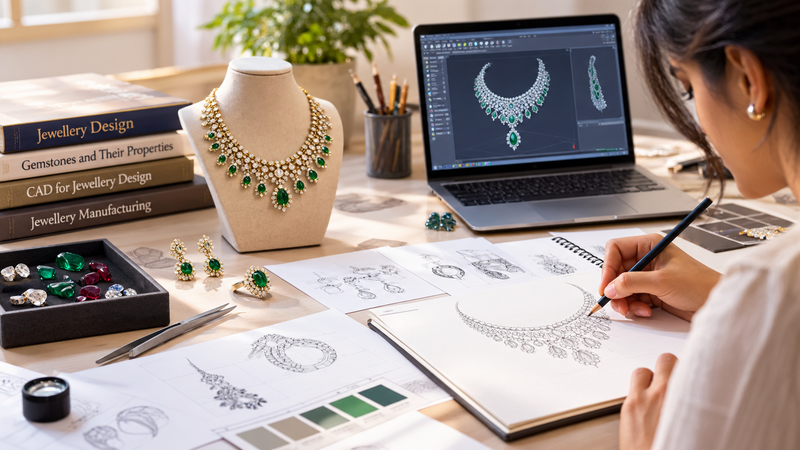
Jewellery designing is a creative field where imagination meets craftsmanship. From traditional Indian ornaments to modern diamond jewellery and fashion accessories, every piece begins with an idea that must be developed into a practical design. For people who enjoy art, fashion, colours, and detailed creative work, jewellery designing can be an interesting career to explore.
However, turning an interest in jewellery into a professional skill requires more than creativity. Students need to understand design principles, jewellery illustration, materials, gemstones, and the techniques used to communicate ideas clearly. A suitable jewellery design course can help learners develop these skills through structured lessons and practical assignments.
With different training options available, selecting the right programme is an important first step. Understanding the syllabus, teaching methods, course duration, and career opportunities can help students make an informed decision when comparing a jewellery design institute.
Understanding the Jewellery Design Industry
Jewellery design involves creating concepts for ornaments and accessories that balance appearance, functionality, and customer preferences. Designers may develop products for weddings, festivals, everyday wear, luxury collections, or contemporary fashion markets.
The design process often starts with research and inspiration. A designer studies shapes, patterns, materials, and trends before preparing sketches or digital concepts. These ideas may then be refined according to manufacturing requirements, the intended audience, and the available materials.
Traditional Indian jewellery provides inspiration through its regional styles, motifs, and craftsmanship. Contemporary jewellery, meanwhile, often explores minimalist forms, geometric patterns, lightweight structures, and experimental materials.
Understanding these different approaches can help students develop a broader design perspective and create original concepts instead of simply copying existing products.
Why Enrol in a Jewellery Design Course?
A structured jewellery design course gives students an opportunity to learn the creative and technical foundations of jewellery designing. It can also help beginners understand how individual design skills work together during product development.
Here are some important benefits of professional training.
Develop Your Design Skills
Students can learn how to express ideas through sketches, illustrations, and design presentations. These skills are useful when explaining a concept to a client, instructor, manufacturer, or potential employer.
Understand Jewellery Materials
Learning about precious metals, gemstones, surface finishes, and jewellery components helps students make more informed design decisions.
Explore Modern Design Technology
Depending on the curriculum, students may be introduced to computer-aided design (CAD), digital jewellery modelling, and 3D visualisation. These tools can support more precise design development.
Build a Professional Portfolio
Practical assignments allow learners to develop a collection of original work. A portfolio can demonstrate creativity, attention to detail, technical understanding, and the ability to develop a concept.
Explore Different Career Paths
With suitable training and experience, students can investigate opportunities in jewellery design, CAD modelling, illustration, product development, and independent design services.
The benefits of a course depend on its curriculum, practical training, teaching quality, and how consistently students apply what they learn.
What Should a Jewellery Design Course Syllabus Include?
When comparing jewellery design classes, look for a curriculum that matches your current skill level and future interests. The exact subjects vary between institutes, but several areas are especially relevant to beginners.
Jewellery Design Fundamentals
Design fundamentals help students understand the elements that make an ornament visually balanced and appealing.
Topics may include symmetry, proportion, rhythm, contrast, shape, texture, and colour harmony. Students can apply these principles to create designs suited to different styles and occasions.
For example, a minimalist ring may depend on clean lines and carefully balanced proportions, while an elaborate necklace may require attention to repeated motifs and decorative details.
Jewellery Sketching and Technical Drawing
Sketching is an essential method of communicating jewellery concepts. Students practise drawing different products, including rings, bracelets, pendants, necklaces, and earrings.
They may learn to show gemstone placement, metal details, surface patterns, and variations in shape. Technical drawing can also help communicate important design features more clearly.
Regular practice improves observation and helps learners develop a consistent drawing style.
Gemstone Identification and Material Awareness
Jewellery designers need a basic understanding of the materials used in their designs. Depending on the programme, lessons may introduce diamonds, coloured gemstones, pearls, precious metals, and alternative jewellery materials.
Students can explore gemstone cuts, colour combinations, settings, and material finishes. This knowledge supports the development of concepts that consider both appearance and practical use.
CAD Jewellery Design
Digital design skills are increasingly relevant to many jewellery design workflows. CAD software allows designers to create three-dimensional models and refine shapes before a product moves further into production.
A course may introduce digital modelling, design adjustments, and visualisation techniques. Students interested in this area should confirm the software covered and the amount of hands-on practice provided.
Jewellery Manufacturing Basics
Designers benefit from understanding how jewellery concepts are translated into physical products. Introductory training may cover casting, stone setting, polishing, finishing, and other manufacturing processes.
These subjects help learners consider construction, durability, comfort, and production feasibility while developing designs.
Collection Development and Presentation
Some programmes also introduce jewellery collection planning and portfolio presentation. Students may explore how to develop several related designs around a common theme, customer group, or fashion concept.
Presenting a collection coherently can help demonstrate a designer's creative thinking and ability to maintain consistency across different products.
How to Select the Best Jewellery Design Institute
Choosing the right jewellery design institute requires careful comparison. A course should offer a learning experience that suits your goals rather than simply promising quick career results.
Compare the Curriculum
Review the syllabus and check whether it covers the subjects you want to learn. If you are a beginner, look for strong design fundamentals and drawing practice. If you want to pursue CAD jewellery design, investigate the digital tools and modelling exercises included.
Evaluate Practical Training
Jewellery designing is a hands-on creative discipline. Look for regular assignments, guided projects, instructor feedback, and opportunities to revise your work.
Ask how the institute helps students apply classroom knowledge to original design concepts.
Review Faculty Background
Faculty experience can influence the quality of instruction and feedback. Explore the instructors' relevant qualifications, professional experience, and teaching approach wherever information is available.
Student project examples can also help you understand the kind of work learners produce during training.
Understand Course Duration and Qualification
Jewellery design programmes may include short-term classes, certificates, diplomas, or longer academic courses. Each may have different entry requirements and learning outcomes.
Before admission, confirm the course duration, eligibility, qualification awarded, assessment methods, and any relevant recognition or affiliation details.
Ask About Portfolio and Career Support
Portfolio guidance, industry exposure, internship assistance, and placement services may be available in some programmes. Confirm exactly what the institute provides rather than assuming every course includes these services.
A strong portfolio and relevant practical skills remain important when applying for work or seeking independent projects.
Jewellery Design Course in India: Who Can Apply?
A jewellery design course in India may suit students who want to enter a creative profession, individuals interested in fashion and accessories, or beginners looking to develop practical design skills.
Depending on the programme, applicants may include:
School graduates interested in jewellery designing.
Students exploring creative and product design careers.
Beginners who enjoy drawing and visual experimentation.
Individuals interested in traditional Indian jewellery and contemporary ornaments.
Working professionals seeking additional design or digital modelling skills.
Aspiring entrepreneurs interested in developing jewellery collections.
Eligibility requirements vary by institution and course level. Some introductory programmes may be open to beginners, while formal academic qualifications can have specific educational requirements.
You should review the admission criteria before choosing a course.
Essential Skills for a Successful Jewellery Designer
Professional growth in jewellery designing depends on a combination of creative ability, technical knowledge, and consistent practice.
Creativity and imagination help designers develop original ideas. Observation skills make it easier to notice patterns, shapes, textures, and influences in everyday surroundings. Drawing and visualisation help communicate ideas, while attention to detail supports accuracy in design development.
An understanding of materials and gemstones helps designers make appropriate choices. Digital skills can be valuable for roles involving CAD software and 3D modelling.
Communication and problem-solving are also important. Designers may need to explain concepts, respond to feedback, adjust designs, and work with other professionals involved in product development.
These abilities do not need to be mastered before enrolment. A structured learning programme and regular practice can help students strengthen them over time.
Career Opportunities After Jewellery Design Training
Completing a relevant course can help students prepare for entry-level opportunities, provided they develop the skills required for their chosen role.
Jewellery Designer
Jewellery designers develop concepts for different products and collections. Their responsibilities may include researching trends, preparing sketches, selecting design elements, and refining concepts.
CAD Jewellery Designer
CAD jewellery designers create digital models using specialised design software. Depending on the role, they may also prepare models and technical information for production workflows.
Jewellery Illustrator
Jewellery illustrators communicate design ideas through sketches, detailed drawings, and visual presentations. Strong illustration and visual communication skills are especially useful.
Jewellery Product Developer
Product developers help turn design concepts into products by considering specifications, materials, production requirements, and collection objectives.
Jewellery Merchandising Professional
Merchandising roles may involve product presentation, collection planning, market trends, and customer preferences within jewellery businesses.
Freelance Jewellery Designer
Experienced designers may offer custom design services to individuals, jewellery brands, manufacturers, or independent businesses. Freelance work also requires communication, project management, and client-handling skills.
Jewellery Business Owner
With additional knowledge of sourcing, production, pricing, marketing, and business operations, designers may explore launching their own jewellery brand or collection.
Career opportunities depend on the individual's skills, experience, portfolio, location, and employer requirements. Completing a course alone does not guarantee a particular job or salary.
How to Prepare for a Jewellery Design Career
You can begin developing your skills by observing different jewellery styles and practising simple designs. Study traditional ornaments, contemporary collections, and everyday accessories to understand how designers use shapes, proportions, and materials.
Create sketches of rings, earrings, pendants, and necklaces. Experiment with different themes, such as nature-inspired jewellery, geometric patterns, or modern bridal collections.
As your confidence grows, organise your best work into a portfolio. Include original sketches, design variations, material ideas, and digital models if you have learned CAD software.
Review your projects regularly and seek constructive feedback. Improving older designs can teach you as much as creating new ones.
When you are ready to enrol, compare jewellery design classes based on their practical approach, curriculum, and suitability for your career goals.
Final Thoughts
Jewellery designing brings together creativity, technical understanding, and an appreciation for craftsmanship. For beginners, the right training can provide a structured way to explore design fundamentals, jewellery illustration, materials, gemstones, and digital techniques.
Before selecting a jewellery design course, review the curriculum, practical assignments, qualification, and opportunities for portfolio development. A suitable jewellery design institute should help you understand the subject and build skills that support your learning goals.
If you are exploring a jewellery design course in India, compare available programmes carefully and choose one that fits your interests, experience, and future plans.
With consistent practice, a growing portfolio, and a willingness to learn, you can build a foundation for exploring different opportunities in the jewellery design industry.
Comments
No comments yet. Be the first to comment!