Graphic Design Course in India | Explore Design Specialisations
Explore graphic design specialisations like branding, advertising, packaging, digital design, illustration, and editorial design.
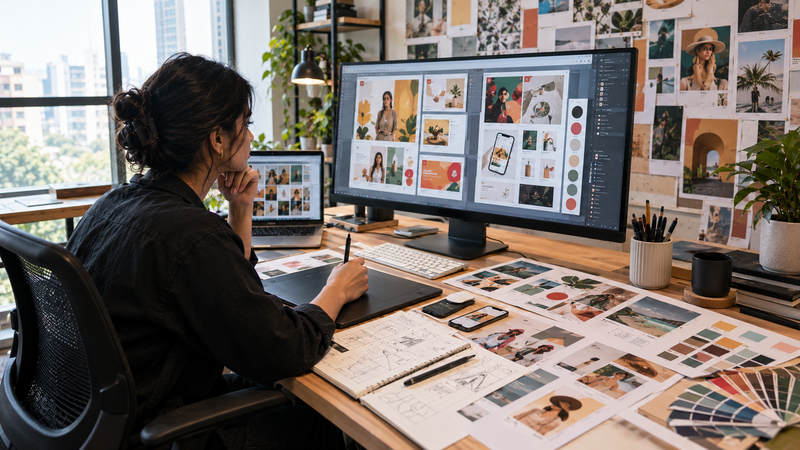
Graphic design is a broad creative field. Some designers enjoy building brand identities, while others prefer advertising campaigns, digital content, packaging, editorial layouts, or illustration.
For someone starting out, this variety can be exciting but also confusing. You may know that you want to work in design without knowing exactly which direction suits you.
The good news is that you don't have to choose a specialisation immediately. Learning the fundamentals first and experimenting with different types of projects can help you understand where your strengths and interests naturally develop.
A structured graphic design course in India can provide an opportunity to explore these different areas while building a strong foundation in visual communication.
Graphic Design Is Bigger Than One Job Role
The term “graphic designer” covers many types of creative work.
A designer may spend one day developing a brand identity and another creating social media graphics or promotional material.
Some common areas include:
Brand identity design
Advertising design
Social media design
Packaging design
Editorial design
Digital graphics
Illustration
Presentation design
Marketing communication
Motion-oriented visual content
These areas share fundamental design principles, but the day-to-day work can be quite different.
Brand Identity for Designers Who Like Big-Picture Thinking
Brand identity can be a good area for people who enjoy building a complete visual system.
Instead of creating a single graphic, the designer thinks about how a business should look and feel across different touchpoints.
A branding project might include:
Logo design
Typography selection
Colour systems
Graphic elements
Business stationery
Packaging
Social media templates
Brand guidelines
The challenge is maintaining consistency while giving the brand a distinctive personality.
Students who enjoy strategy, research, and creating connected visual systems may find branding projects particularly interesting.
Advertising Design for Fast-Paced Creative Work
Advertising designers work with messages that need to capture attention quickly.
A campaign might require posters, digital advertisements, social media creatives, banners, or promotional graphics.
This type of work often involves combining headlines, imagery, brand elements, and calls to action into a clear composition.
Advertising can also involve experimentation because different concepts may be developed before the final campaign direction is selected.
If you enjoy coming up with multiple visual ideas around one message, advertising design may be worth exploring.
Social Media Design for Digital Content Creators
Social media has created an ongoing need for fresh visual content.
Designers may create posts, stories, thumbnails, campaign graphics, announcements, and promotional creatives.
The challenge is not simply making something attractive. The design needs to communicate quickly while fitting the visual language of the platform and brand.
People who enjoy fast-moving projects and digital content may find this area appealing.
Packaging Design for Designers Who Like Physical Products
Packaging combines graphic design with the physical form of a product.
The designer needs to think about the front of the package, supporting information, brand identity, product details, visual hierarchy, and the available space.
Unlike a digital graphic that appears on a screen, packaging exists in a physical environment.
A design may need to work from different viewing distances and angles while remaining consistent with the overall brand.
Students can explore this area through packaging mockups and product branding projects.
Editorial Design for People Who Enjoy Organising Information
Editorial design focuses on publications and information-heavy layouts.
Magazines, brochures, catalogues, reports, and books all require careful organisation.
Designers work with:
Headlines
Body copy
Images
Captions
Columns
Page numbers
Grids
White space
The goal is to create pages that are visually engaging while making information comfortable to read.
If you enjoy structure, typography, and detailed layouts, editorial design can offer plenty of creative challenges.
Illustration for Those Who Prefer Creating Visuals From Scratch
Illustration provides an opportunity to develop original visual elements instead of relying entirely on photographs.
Illustrators and graphic designers may create characters, icons, patterns, editorial artwork, decorative graphics, and custom visual assets.
Digital illustration can also be combined with branding, advertising, packaging, and social media design.
This area can be especially interesting for learners who enjoy drawing and developing distinctive visual styles.
Digital Design for Screen-Based Experiences
Modern designers increasingly create graphics specifically for digital environments.
These can include website graphics, digital campaigns, app visuals, banners, presentations, and interface-related assets.
Digital work requires designers to consider screen sizes, responsive layouts, readability, and how people interact with content.
A strong understanding of composition and hierarchy remains important even when the final design exists entirely on a screen.
Presentation Design Is Also a Design Skill
Presentations are often overlooked when people think about graphic design.
Businesses, educators, startups, and professionals regularly need presentations that communicate complex information clearly.
A presentation designer may work with charts, diagrams, photographs, headlines, icons, and supporting information.
The challenge is creating slides that are visually organised without overwhelming the viewer.
This area can be useful for designers who enjoy combining information with visual storytelling.
How Can You Discover Your Best Design Direction?
You don't need to make a permanent decision after completing your first project.
Instead, try different creative challenges.
Create a logo and brand identity.
Then design a promotional poster.
After that, experiment with packaging.
Next, create a magazine spread or social media campaign.
Compare the process.
Which project made you want to keep working even after the assignment was finished?
Which type of problem did you enjoy solving?
Which work received the most positive feedback?
These observations can help you recognise patterns in your interests.
Don't Choose a Specialisation Based Only on Trends
A design field may become popular because of current technology or social media trends, but popularity doesn't necessarily mean it will suit you personally.
Your interests, strengths, preferred working style, and willingness to practise are also important.
Someone who enjoys detailed typography may prefer editorial design, while another person who loves visual storytelling may enjoy advertising or branding.
Exploration is therefore more useful than rushing into a specialisation.
How a Graphic Design Course Can Help You Explore
A good graphic design course should give students enough variety to experience different types of design problems.
Instead of focusing on one project style, students can work on branding, advertising, layouts, digital graphics, image editing, and other assignments.
This broad exposure can help beginners understand the creative industry before deciding where they want to develop deeper expertise.
What to Look for in Graphic Design Classes
When comparing graphic design classes, look at the variety of practical work included in the learning experience.
Useful questions include:
Will I work on different types of design projects?
Will I receive feedback on my work?
Will I learn both creative principles and design software?
Will I have opportunities to experiment?
Will I develop projects that can become part of a portfolio?
Will mentors explain professional design workflows?
The answers can tell you more about the learning experience than a simple list of software names.
Why a Graphic Design Institute Can Provide Structure
Learning independently gives you freedom, but it can also leave gaps in your knowledge.
A structured graphic design institute can provide a planned curriculum, guided projects, mentor feedback, and a sequence of skills that gradually become more advanced.
This can be particularly useful for beginners who are unsure about what to learn first.
However, classroom learning works best when students continue practising outside class and experimenting with their own ideas.
Your Specialisation Can Change Over Time
You don't have to stay in one design area forever.
A designer who starts with branding may later move into digital design. Someone interested in illustration may discover an interest in packaging. A social media designer may eventually explore motion graphics.
Design skills often overlap, so learning one area can support another.
The foundation you build early—typography, colour, composition, hierarchy, concept development, and visual communication—can remain useful throughout your career.
Build a Portfolio Around Your Strengths
Once you have explored different areas, your portfolio can gradually become more focused.
If branding interests you most, your portfolio might contain several identity projects.
If digital campaigns are your strength, you could showcase social media campaigns, advertisements, and web graphics.
The portfolio should reflect the kind of work you want to pursue while still showing enough variety to demonstrate your abilities.
Final Thoughts
Graphic design offers many creative directions, and there is no single path that suits every learner. Branding, advertising, social media, packaging, editorial design, illustration, and digital graphics all require different approaches.
A graphic design course in India can give beginners the opportunity to explore these areas before deciding where they want to specialise.
Rather than choosing a direction based only on what looks popular, experiment with different projects and pay attention to the type of creative problems you genuinely enjoy solving.
Your specialisation can evolve as your skills grow. The most important step is to build strong fundamentals, keep experimenting, and give yourself enough time to discover your own design direction.
Comments
No comments yet. Be the first to comment!