Beyond Decorating: How to Build Practical Interior Design Skills in Jodhpur
Explore an interior design course in Jodhpur and learn space planning, design software, materials, and practical skills for a creative career.
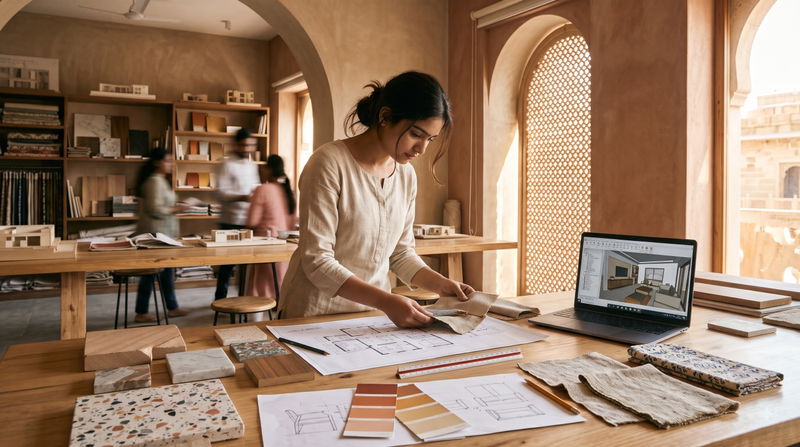
A beautiful room is not created by choosing attractive furniture or matching wall colours alone. Good interior design requires creativity, technical knowledge, space planning, an understanding of materials, and the ability to turn a client's ideas into a functional space.
As homes, offices, retail stores, restaurants, and commercial interiors continue to evolve, people are paying more attention to how their spaces look and function. This creates opportunities for individuals who want to explore interior design as a profession.
If you enjoy planning rooms, experimenting with colours, exploring furniture layouts, or imagining how an empty space could be transformed, learning interior design may be the right step for you.
Choosing the right Interior Design Course in Jodhpur can help you develop these interests into practical skills. The important thing is to find a learning environment that combines design fundamentals, software knowledge, hands-on projects, and an understanding of real client requirements.
What Makes Interior Design More Than Just Decoration?
Interior design brings creativity and technical planning together. Designers consider how people use a space, how furniture should be arranged, how lighting affects the atmosphere, and which materials suit the purpose of a room.
For example, designing a small apartment requires different decisions from planning a spacious villa. A compact living room may need multifunctional furniture and clever storage, while a commercial office requires thoughtful circulation, lighting, and comfortable work areas.
A professional interior designer learns to balance several factors:
Space planning: Making the best use of available floor space.
Colour coordination: Selecting colours that complement the purpose and mood of a room.
Lighting design: Combining natural and artificial lighting effectively.
Material selection: Choosing suitable flooring, wall finishes, fabrics, and furniture materials.
Furniture planning: Creating layouts that support movement, comfort, and usability.
Technical drawings: Communicating design ideas through accurate plans and elevations.
Client communication: Understanding expectations, budgets, and project requirements.
These skills form the foundation of a successful interior design project and should be an important part of any quality training programme.
How to Choose the Right Interior Design Institute in Jodhpur
Selecting a suitable interior design institute in Jodhpur is an important decision because the quality of your training can influence how confidently you approach real projects.
Instead of choosing an institute only because of its location, advertisements, or course duration, evaluate what you will actually learn.
1. Look for Practical, Project-Based Learning
Interior design is a skill-based field. Reading about design principles is useful, but applying them to actual design problems is equally important.
Look for training that includes room layouts, residential design exercises, furniture arrangements, material selection, and complete interior design concepts.
Project-based learning helps you understand how different decisions affect the final result. It also gives you examples of your work that you can present when applying for internships or entry-level opportunities.
2. Check the Software Training
Modern interior design workflows often involve digital tools for drafting, modelling, visualisation, and presentation.
Depending on your course level, useful software may include:
AutoCAD: For preparing floor plans, elevations, and technical drawings.
SketchUp: For developing three-dimensional models of interior spaces.
3ds Max: For creating detailed 3D models and visualisations.
V-Ray: For producing realistic lighting, material, and rendering effects.
Revit: For BIM-based modelling and coordinated building documentation.
You do not necessarily need to master every tool at the beginning. A structured learning path should introduce software according to your experience and career goals.
The best approach is to understand the design principles first and then use software to communicate your ideas more effectively.
3. Understand the Course Structure
Before enrolling, review the curriculum carefully. It should explain what you will learn, how the classes are conducted, and whether practical assignments are included.
Ask whether the programme covers design fundamentals, drawing skills, space planning, materials, furniture, lighting, software, and project presentations.
Also check the course duration, assessment method, certificate or qualification awarded, and eligibility requirements. If you are considering a recognised degree or diploma, verify the awarding institution and the applicable recognition details.
A clear curriculum makes it easier to understand whether the course matches your expectations.
4. Evaluate Mentorship and Feedback
Learning becomes more effective when instructors explain mistakes and help students improve their work.
During your search for an interior design institute in Jodhpur, ask whether students receive feedback on their layouts, drawings, 3D models, and final presentations.
Mentorship can help you identify weaknesses in proportion, lighting, furniture placement, material combinations, and technical accuracy.
It also teaches you how to explain design decisions rather than relying entirely on personal preferences.
What Can You Learn in Interior Design Classes in Jodhpur?
Well-structured interior design classes in Jodhpur should help you progress from basic concepts to more detailed design work.
Here are some important learning areas to consider.
Design Principles and Space Planning
Start by understanding balance, proportion, rhythm, contrast, scale, and visual harmony. These principles help you create interiors that feel organised and purposeful.
Space planning teaches you how to arrange furniture, maintain circulation, use corners effectively, and make rooms comfortable without overcrowding them.
Colour, Lighting, and Materials
Colour and lighting can change the appearance and atmosphere of an interior. Students should learn how to select palettes, understand lighting layers, and coordinate finishes.
Material knowledge is equally valuable. Different materials have different costs, durability levels, maintenance requirements, and visual characteristics.
Learning to compare these factors helps you create designs that are attractive as well as practical.
Technical Drawings and Interior Documentation
Design ideas must be communicated clearly to clients, contractors, carpenters, electricians, and other professionals.
Technical drawings help communicate dimensions, furniture positions, elevations, and other project details. Understanding these drawings can reduce confusion during execution.
Students should also learn why accurate measurements and clear documentation matter when translating a concept into a finished interior.
3D Modelling and Visualisation
Three-dimensional visualisation allows clients to understand a proposed design before work begins.
By learning suitable modelling and rendering software, students can explore furniture arrangements, test material combinations, adjust lighting, and present their ideas more clearly.
This skill is particularly useful when developing a portfolio or explaining design concepts during a client presentation.
Is an Interior Design Diploma in Jodhpur a Good Starting Point?
An interior design diploma in Jodhpur may be a suitable option for students who want structured, career-oriented training without necessarily committing to a longer academic programme.
However, diploma courses differ in duration, depth, curriculum, and recognition. Some focus on foundational design and software skills, while others cover a broader range of technical and practical subjects.
Before choosing a diploma, consider your educational background, available study time, budget, and long-term plans.
A short-term course may be appropriate if you want to develop specific skills, such as AutoCAD drafting or 3D visualisation. A more comprehensive programme may be better if you want to build a wider foundation in interior design.
Do not judge a course by duration alone. Review the curriculum, practical assignments, instructor support, portfolio opportunities, and qualification details before making your decision.
Why a Portfolio Matters in Interior Design
A portfolio is one of the most useful ways to demonstrate your design abilities. It allows potential employers or clients to see how you approach a problem, develop an idea, and communicate a solution.
You can begin building a portfolio while studying.
Consider including:
Residential room layouts and furniture plans.
Mood boards showing colours, textures, and materials.
Lighting and ceiling concepts.
Kitchen and bedroom design exercises.
AutoCAD drawings and 3D visualisations.
Before-and-after design concepts.
A brief explanation of the objective and decisions behind each project.
Focus on presenting a few well-developed projects rather than filling your portfolio with unfinished work.
Whenever possible, explain the challenge, your design approach, and how your proposed solution improves the space. This demonstrates your thinking process, not just your ability to create attractive images.
Career Opportunities After Learning Interior Design
After completing suitable training and developing practical skills, you may explore different career paths depending on your qualification, experience, and portfolio.
Possible opportunities include:
Interior Design Assistant: Support senior designers with drawings, research, material selection, and project documentation.
CAD Designer: Prepare technical drawings and layouts using drafting software.
3D Visualiser: Create digital models and rendered images that communicate interior concepts.
Residential Interior Designer: Work on homes, apartments, bedrooms, kitchens, and living spaces as your skills and experience grow.
Commercial Interior Design Professional: Assist with offices, retail outlets, hospitality spaces, and other commercial projects.
Freelance Interior Designer: Take on suitable projects independently once you have the necessary skills, experience, and professional network.
Your progress will depend on more than completing a course. Software proficiency, communication, design judgement, portfolio quality, practical exposure, and the ability to meet client requirements all contribute to professional growth.
How to Start Learning Interior Design in Jodhpur
If you are new to the field, follow a simple learning plan.
Step 1: Explore your interests. Observe residential interiors, furniture layouts, lighting, colours, and materials. Think about why certain spaces work better than others.
Step 2: Learn the fundamentals. Begin with drawing, measurements, design principles, and space planning before moving into advanced tools.
Step 3: Practise with software. Choose software that matches your learning level and practise creating accurate plans and understandable 3D models.
Step 4: Complete design projects. Work on sample rooms and small residential layouts. Gradually move towards complete interior concepts.
Step 5: Build your portfolio. Document your strongest work and improve each project using feedback.
Step 6: Compare training institutes. Visit campuses where possible, ask to see student projects, review the syllabus, and clarify the qualification you will receive.
This approach helps you make an informed decision and build skills systematically rather than relying on software knowledge alone.
Start Your Interior Design Journey with the Right Training
Choosing an Interior Design Course in Jodhpur is about finding a programme that matches your goals and gives you opportunities to practise what you learn.
At Inframe School of Art, Design & Business, prospective students can explore interior design training options and enquire about the available course formats, curriculum, and practical learning opportunities.
Before enrolling, review the current programme details, software coverage, project work, qualification, and student support to determine whether the course is right for you.
If you are comparing an interior design institute in Jodhpur, look beyond promotional claims. Focus on the quality of teaching, practical experience, and the skills you will be able to demonstrate when you complete your training.
The first step towards a creative career is learning how to turn ideas into functional, well-planned spaces. With consistent practice, thoughtful guidance, and a strong portfolio, you can begin building the foundation for a future in interior design.
Frequently Asked Questions
1. How do I choose the best interior design institute in Jodhpur?
Compare the curriculum, faculty experience, practical projects, software training, portfolio development, course duration, and qualification. Ask to see student work and verify recognition where applicable before enrolling.
2. What do interior design classes in Jodhpur teach?
Depending on the programme, classes may cover design principles, space planning, colour theory, lighting, materials, furniture layouts, technical drawings, and software such as AutoCAD, SketchUp, and 3ds Max.
3. Who can enrol in an interior design diploma in Jodhpur?
Eligibility varies by institution and programme. Some courses accept students after Class 10 or 12, while others may have additional requirements. Check the current eligibility criteria before applying.
4. Is an interior design course in Jodhpur suitable for beginners?
Yes. A beginner-friendly course should introduce fundamental design concepts before progressing to technical drawings, digital tools, and practical projects. Previous professional experience is not always necessary.
5. Can I build a career after completing an interior design course?
A course can help you develop foundational skills for entry-level roles or further study. Your opportunities will depend on the programme, practical experience, portfolio, software proficiency, and employer requirements.
6. Which software is useful for interior design students?
AutoCAD is useful for technical drawings, SketchUp and 3ds Max for 3D modelling, V-Ray for rendering, and Revit for BIM-based workflows. The most appropriate tools depend on your chosen specialisation and course curriculum.
Comments
No comments yet. Be the first to comment!